

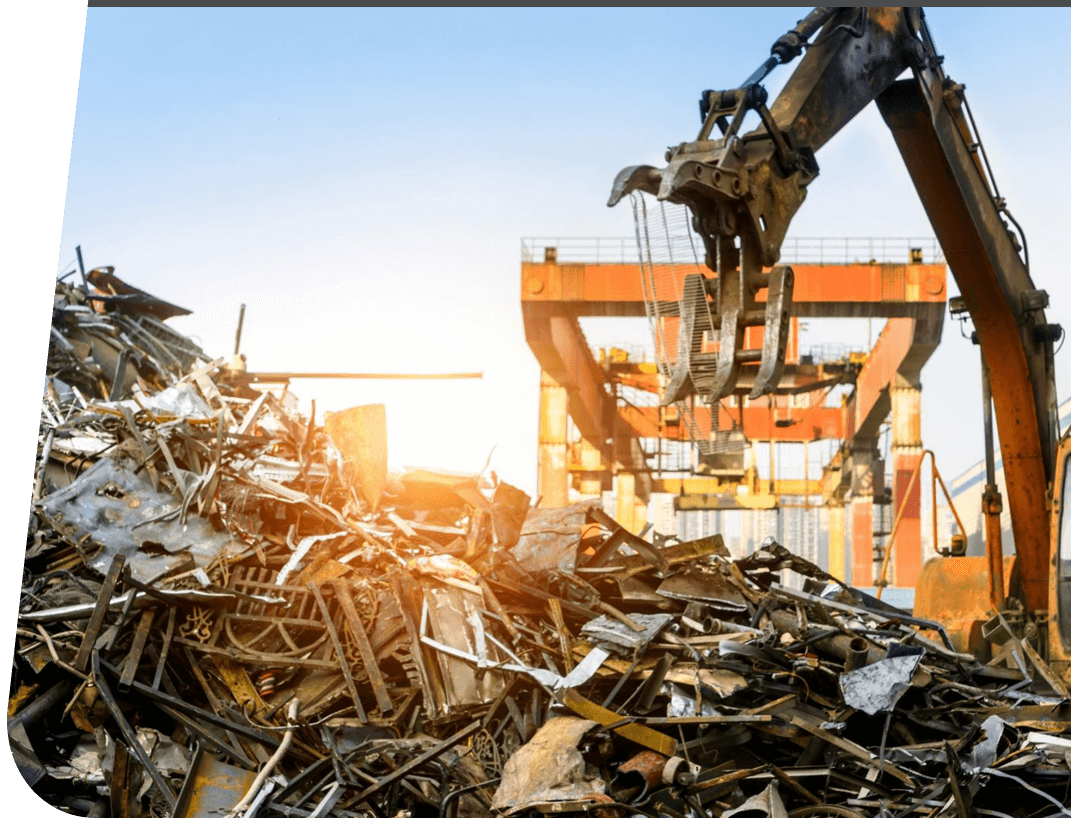
Unlike many other materials, metals can be recycled time and time again without their properties getting degraded. That’s one reason why steel is the most recycled material in the world.
Recycling scrap metal helps to fulfill both a financial incentive and an environmental imperative. Read on to find out about the different types of scrap metal, the recycling process, and the benefits of giving metals new life.
What Is Scrap Metal Recycling?
Scrap metal recycling refers to the recovery and processing of recyclable metal materials from end-of-life products and structures so they can be reintroduced as raw material for the production of new goods.
Types of Recyclable Metals
Scrap metal is categorized into two types: ferrous and non-ferrous. Here’s the difference between the two:
FERROUS METALS
The term “ferrous” is derived from the Latin word for iron and refers to both iron and steel. Iron is the second most commonly occurring metal in our planet’s crust. Its natural magnetism is what gives the Earth a magnetic field. Because nearly all ferrous metals are magnetic, metal scrap yards often use massive electromagnets mounted on excavators to load and unload ferrous scrap from trucks and move it around the yard.
The following items are also made of ferrous metals:
- Construction and building materials such as I beams, ductwork, rebar, and electrical wiring
- Transportation parts and products such as cars, railroad scrap, rotors, drums, and motor blocks
- Containers and packaging
Scrap metal is also a byproduct of steel manufacturing. This type of scrap — including clippings, busheling, and skeletons — is easy and valuable to recycle back into the same stream it came from, because it isn’t altered and therefore doesn’t require as much processing.
Non-FERROUS METALS
Because non-ferrous metals don’t lose their chemical properties during the recycling process, they can be endlessly recycled. There’s a long list of non-ferrous metals, but some of the most common base metals include aluminum, copper, nickel, lead, tin, and zinc. Precious metals like gold and silver also belong to the non-ferrous category. Each of these has a wide variety of uses.
Non-Recyclable Metals
Unfortunately, not all scrap metal can be recycled, but the list of non-recyclable metals is exceptionally short. It includes radioactive metals like uranium and plutonium as well as toxic metals like mercury. However, there are some metals or metal items that scrap yards will not take, often for liability reasons. Other items they may charge to take because it takes extra steps to process them. It’s wise to check with a yard before you bring something in if you’re not sure.

Sed lacinia, urna non tincidunt mattis, tortor neque adipiscing diam, a cursus ipsum ante quis turpis. Nulla facilisi. Ut fringilla. Suspendisse potenti. Nunc feugiat mi a tellus consequat imperdiet. Vestibulum sapien. Proin quam. Etiam ultrices.
Quisque volutpat condimentum velit. Class aptent taciti sociosqu ad litora torquent per conubia nostra, per inceptos himenaeos. Nam nec ante.
Murabitur sit amet mauris. Morbi in dui quis est pulvinar ullamcorper. Nulla facilisi. Integer lacinia sollicitudin massa. Cras metus.